Divorce Legal Services in Lahore: Who We Help and How to Begin
Our Lahore family law advocates help individuals understand the legal route to ending a marriage, prepare the required documents, address procedural objections and protect related rights concerning children, maintenance and dower. A divorce is rarely a single-paper exercise: the appropriate procedure depends on whether the husband pronounces talaq, the wife seeks khula, the wife exercises a delegated right of divorce, or both spouses agree to separate.
Experienced Divorce Lawyers in Lahore for Different Routes to Separation
The first question for Divorce Lawyers in Lahore is not simply whether the parties want to separate. It is which legal route applies and what rights or obligations accompany that route. Pakistani Muslim family law distinguishes talaq by a husband, khula through a Family Court, delegated divorce (talaq-e-tafweez), and other recognised forms of dissolution. Each route requires its own attention to evidence, notice, service, reconciliation and documentation.
How Lahore Family Advocates Assess a Marriage Record
Our Lahore family law advocates examine the Nikah Nama, the history of communications between spouses, existing court proceedings, residence and jurisdiction, any children, and the parties' financial arrangements. Where the family follows a particular school of Muslim personal law, that context also matters. We avoid presenting every divorce as though the same form, timeline and evidential rules apply.
Family Court Representation for Divorce and Khula Cases
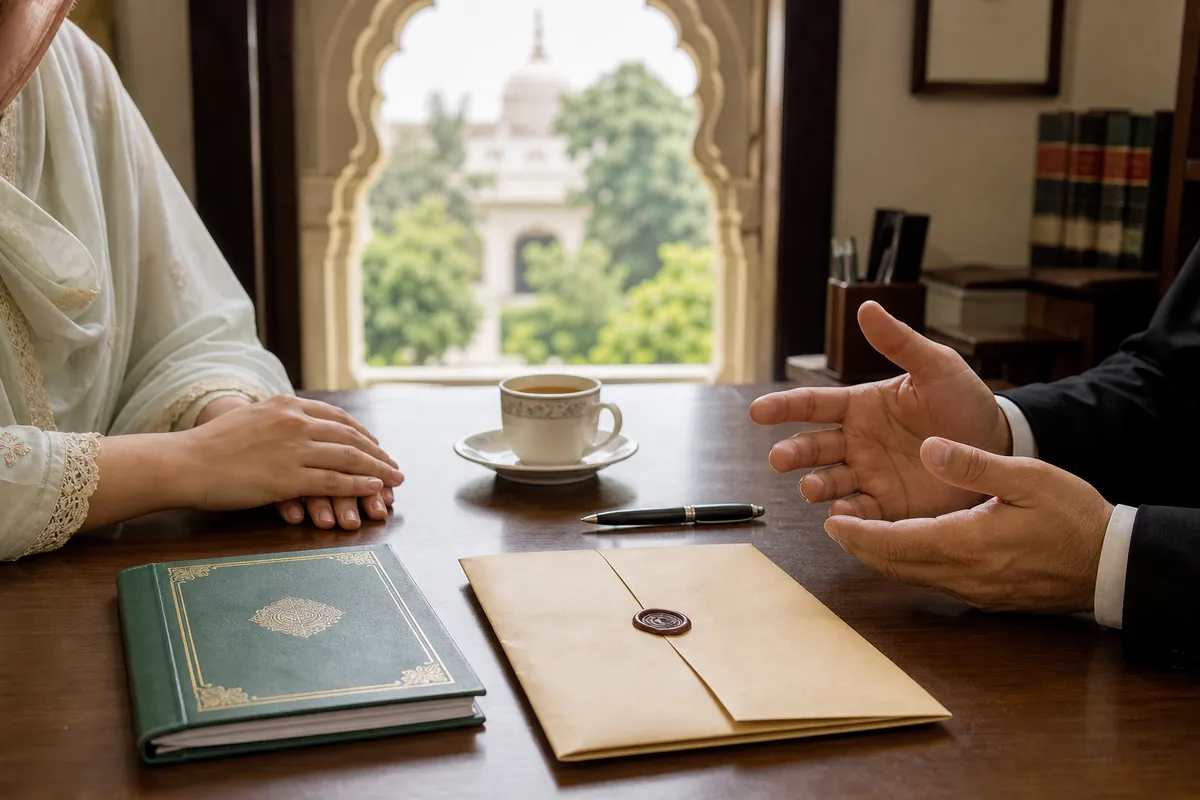
Legal assistance may include a confidential initial assessment, drafting or reviewing a talaq notice, preparing a khula plaint, advising on delegated divorce clauses, responding to a family suit, reviewing dower claims, and planning related custody or maintenance proceedings. The lawyer's task is to identify the correct remedy and protect the record, not merely to produce a certificate.
Before Signing Divorce Documents: Advice from Lahore Divorce Lawyers
Divorce Lawyers in Lahore should review proposed settlement terms before signature. A document signed under pressure, an unclear settlement or a notice addressed to the wrong authority can lead to later disputes. Clients should seek advice before relinquishing dower, withdrawing proceedings, accepting an informal settlement or assuming that an oral announcement alone has completed every statutory formality.
Talaq Notices in Lahore: Procedure and Reconciliation
Under section 7 of the Muslim Family Laws Ordinance, 1961, a husband who pronounces talaq must give written notice to the competent Chairman and provide a copy to the wife. The statutory process includes an opportunity for reconciliation. Ordinarily, talaq does not become effective until 90 days from delivery of the notice to the Chairman, unless revoked earlier; where pregnancy is involved, the statute provides a potentially later effective date.
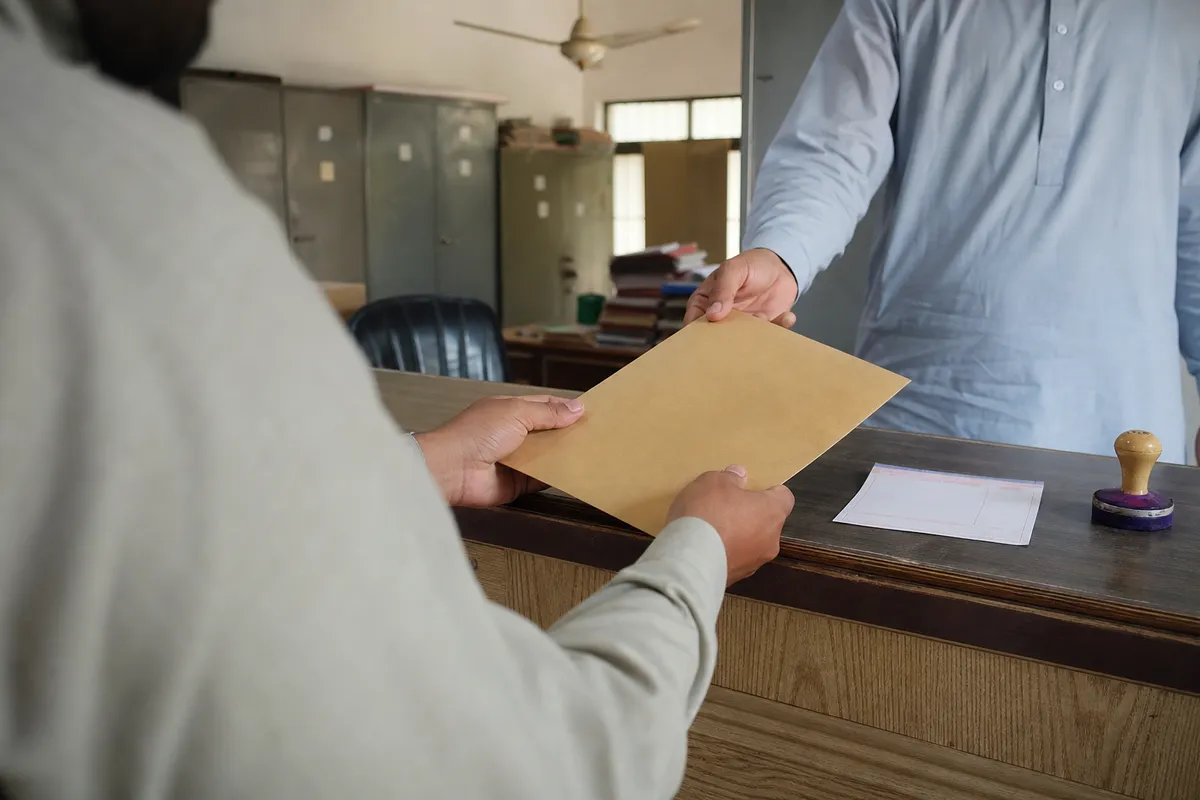
When seeking talaq advice from our Lahore family law advocates, ask how notice receipt will be documented.
Counting the Talaq Notice Period Correctly
The 90 days should not be counted casually from the date of an oral pronouncement, a private deed, a message or the date a lawyer drafted paperwork. The date and validity of receipt by the appropriate authority matter. Proof of service and acknowledgement should be retained. The statute also deals with constitution of an Arbitration Council, with a view to reconciliation.
What Should a Lawyer Check in a Lahore Talaq File?
Divorce Lawyers in Lahore reviewing a talaq file focus on the identities and addresses of the spouses, the Nikah Nama, the wording and date of the talaq pronouncement, the relevant local authority, delivery of the notice, service on the wife, and any record of revocation or reconciliation. Additional considerations may arise where a spouse lives abroad, addresses have changed, or the parties dispute the pronouncement.
Divorce Certificates in Lahore and Union Council Records
People consulting our Lahore family law advocates may ask for a divorce certificate without distinguishing the underlying route. Clients often refer to the resulting paperwork as a divorce certificate. The issuing authority and documentation depend on the applicable process and local administrative practice. A Family Court decree, a talaq notice, a Union Council record and a later certificate are not interchangeable documents. A lawyer should check the actual legal basis of dissolution before advising which record an employer, government office, consulate or other institution requires.
Khula Lawyers in Lahore: Dissolution Through the Family Court
Khula is a judicial route by which a wife seeks dissolution of marriage through the Family Court. The court must follow the applicable procedural law and examine whether reconciliation is possible. Under section 10 of the Family Courts Act, 1964 as applicable in Punjab, where reconciliation fails in a suit for dissolution, the court's duties and any consequential order concerning dower depend on the statutory provisions and the basis of the claim.
Divorce Lawyers in Lahore should distinguish khula from dissolution on other pleaded grounds.
Khula Evidence, Reconciliation and Grounds for Dissolution
A wife should not assume that she must prove a criminal offence or secure her husband's consent in every khula case. Equally, applicants should not assume that every form of dissolution is khula or that the same dower consequences necessarily apply to a suit based on statutory grounds. Clear pleading of the cause of action is therefore important.
Preparing Khula Petitions for Lahore Family Courts
Our Lahore family law advocates assess the marital record, the stated reasons for dissolution, the parties' addresses, the Nikah Nama and any relevant prior proceedings. We prepare a plaint that accurately reflects the requested relief rather than using a generic template that omits dower, financial claims or connected issues.
Dower Rights in Lahore Khula and Divorce Cases
In Punjab, section 10(5) of the Family Courts Act provides that in dissolution through khula the court may direct surrender of up to 50% of deferred dower or up to 25% of admitted prompt dower, subject to the applicable law and facts. It would be inaccurate to tell every client that she must surrender all her dower, or that no dower consequences can ever arise. Outstanding deferred dower and other distinct claims require individual advice.
Divorce Lawyers in Lahore for Delegated Divorce and Mutual Separation
For delegated divorce, Divorce Lawyers in Lahore begin with the actual Nikah Nama. A Nikah Nama may delegate a right of divorce to the wife. Such a right should be checked against the actual marriage contract rather than assumed. Section 8 of the Muslim Family Laws Ordinance, 1961 addresses dissolution otherwise than by talaq, including exercise of a duly delegated right, and applies section 7 so far as relevant.
Mutual Separation Agreements and Divorce Formalities
Where spouses agree on separation, the legal character of their agreement still matters. A mutual understanding about property, children or financial matters is not automatically a substitute for the required dissolution procedure. Nor does an informal agreement override the court's responsibility to consider a child's welfare.
Delegated Divorce in Lahore: Reviewing the Nikah Nama
Our Lahore family law advocates examine the relevant Nikah Nama entries, any conditions attached to delegated authority, and the intended legal route. A defective or ambiguous document may require clarification before notices are sent. When parties live in different cities or countries, jurisdiction and service arrangements are reviewed at the outset.
For parents seeking Divorce Lawyers in Lahore, a practical custody discussion should identify the child's present living arrangements, school timetable, transport, medical needs and whether an interim contact arrangement is necessary. These details help turn a broad request into relief that a court can evaluate.
Child Custody and Visitation After Divorce in Lahore
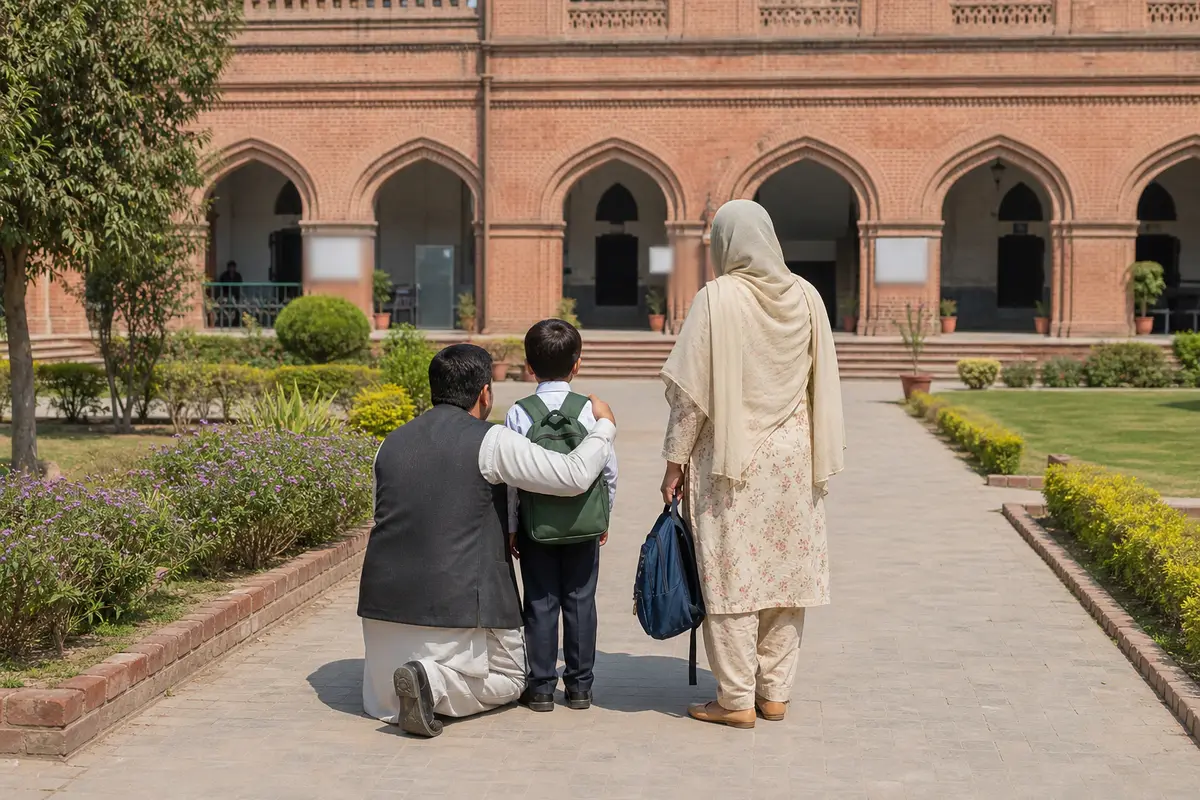
Divorce does not automatically determine who will have custody of children. Custody, guardianship and visitation involve separate legal considerations, including the welfare of the minor. Parents should be careful about agreements that attempt to treat children as bargaining items in a divorce or dower dispute.
Interim Custody, Visitation and Children's Welfare
A lawyer may advise on interim custody, a visitation schedule, safe handover arrangements, school and medical decisions, and evidence relevant to the child's welfare. The appropriate court and procedure depend on the relief sought and existing litigation. We encourage clients to distinguish immediate protective concerns from longer-term parenting arrangements.
Child Maintenance Claims After Divorce in Lahore
Our Lahore family law advocates can identify records supporting the child's needs. Maintenance for children should be considered independently of disagreements between parents. Financial information, needs, educational expenses and the circumstances of the parties can become relevant in proceedings. Avoid relying on verbal promises where a practical and enforceable arrangement is needed.
Divorce Lawyers in Lahore should also identify exactly what financial relief is sought. Unpaid dower is distinct from personal jewellery, recovery of dowry articles and ongoing child maintenance. Keeping each claim separate clarifies the evidence and reduces the risk of accidentally waiving a right during negotiations.
Dower, Dowry Articles and Maintenance Claims in Lahore
Financial questions often outlast the dissolution itself. Unpaid prompt or deferred dower, recovery of personal belongings or dowry articles, maintenance and other claims should be assessed on their own legal footing. Different documents and evidence may be needed for different remedies.
Evidence for Dower, Dowry and Maintenance Claims
Our Lahore family law advocates can help organise receipts, bank records, lists of articles, messages, admissions and other available evidence. Clients should not invent valuations, alter documents, delete communications or sign full-and-final settlements without understanding their effect. The legal treatment of a particular asset depends on ownership, proof and the relief claimed.
Divorce Financial Settlements and Property Claims in Lahore
Divorce Lawyers in Lahore should draft settlements with precise, enforceable terms. A workable settlement should identify the parties, obligations, amounts or property, deadlines, method of payment, and any court proceedings affected. Clauses dealing with children should be approached with special care: their welfare is not a disposable contractual benefit. Where a matter is already pending in court, the settlement must be handled through the proper process.
Step-by-Step Assistance from Divorce Lawyers in Lahore
Step 1 — Initial Legal Assessment
Our Lahore family law advocates first establish the type of marriage, marital history, relevant addresses, children, financial claims, any safety issues, and whether proceedings have already started. The right remedy is identified before filing or issuing notice.
Step 2 — Documents Required for Lahore Divorce Proceedings
For clients visiting Divorce Lawyers in Lahore, the initial document checklist depends on the chosen route. Typically useful materials include CNIC or identification copies, Nikah Nama, the spouse's known address, existing notices, correspondence, court documents, and records relevant to dower or children. The precise list depends on the matter. Missing documents do not automatically mean that legal advice is impossible.
Step 3 — Drafting and Filing Divorce Documents in Lahore
For a talaq matter, the lawyer focuses on the section 7 notice and proper delivery and service. For khula and other court-based remedies, the lawyer prepares the appropriate pleading and follows the Family Court's filing and service procedure. For delegated divorce, the contract and applicable statutory requirements are examined.
Step 4 — Reconciliation and Lahore Family Court Hearings
Our Lahore family law advocates distinguish reconciliation by the Arbitration Council from Family Court reconciliation. The law recognises reconciliation processes, but the procedural route differs. Parties should understand whether they are dealing with an Arbitration Council or a Family Court and should keep proof of notices, hearing dates and orders. No responsible lawyer can promise a fixed outcome regardless of service, objections or court workload.
Step 5 — Final Record and Related Claims
After the legally relevant process, the client should obtain and preserve certified orders and other applicable records. We also identify unfinished maintenance, dower, custody or visitation issues. A divorce matter is not administratively complete merely because an informal statement has been made.
When instructing Divorce Lawyers in Lahore, clients should bring any previous plaint, written statement, decree, summons or Union Council record. Earlier proceedings may affect the correct court, available relief and next procedural step; a new case should not be prepared without checking what has already been filed.
Lahore Family Court Jurisdiction and Local Filing Rules
Appropriate jurisdiction depends on the type of proceeding, statutory rules and facts, including residence and the relief sought. A client's present location alone should not be treated as conclusive for every category of case. Lahore matters may involve clients from Chauburji, Gulberg, Model Town, Johar Town, DHA Lahore, Garden Town, Allama Iqbal Town and Cantt, as well as overseas Pakistanis with a relevant connection to Lahore.
Meet Our Lahore Family and Divorce Law Team
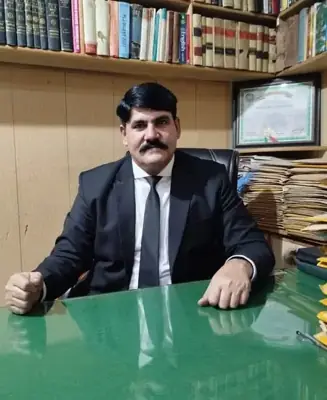
Our Lahore office is located at Office No. 2, 1st Floor, Al-Mairaj Arcade, near Surayya Azeem Trust Hospital, Chauburji Chowk, Lahore. Muhammad Junaid Kahloon, Senior Advocate, leads family matters at the Lahore office, and Fiaz Ahmed Khakh, Advocate Supreme Court, handles appeals and writ petitions before the High Court and the Supreme Court. An appointment allows us to examine the available documents and determine whether a court appearance, drafting engagement or other advice is required.
Overseas Pakistani Divorce and Cross-Border Family Cases
Overseas Pakistanis can consult our Lahore family law advocates before sending original papers. An overseas client may need guidance about documents signed abroad, representation, proof of address, service, and use of a Pakistani decree or certificate in another jurisdiction. Requirements for foreign acceptance, translations or authentication vary by institution and country. Avoid promising that one document will automatically be valid everywhere.
Choosing Experienced Lahore Family Law Advocates
A carefully managed divorce file requires more than general drafting. Counsel should distinguish religious concepts from statutory procedure, explain deadlines, identify contested and uncontested issues, and preserve a reliable record. Clear advice is particularly important where there are children, unpaid dower, disputed service, overseas addresses or parallel litigation.
Legal Representation, Confidentiality and Realistic Outcomes
As Divorce Lawyers in Lahore, we prioritise confidential discussion, accurate pleadings, transparent next steps and realistic communication. Our role is to advise and represent clients within the law; we cannot guarantee that a court will accept a particular factual allegation, grant every requested relief or complete a case by a promised date.
Speak to Our Divorce Lawyers in Lahore
For advice on talaq notices, khula suits, delegated divorce, custody, maintenance and related family disputes, contact our Lahore family law advocates. Call/WhatsApp: +92 316 6644789. Telephone calls: 10 am–10 pm; WhatsApp: 24/7. Please do not send sensitive identity documents into an unverified chat or social-media account.
Outside Lahore, the Qanoon Group network's divorce lawyers and divorce lawyers in Pakistan assist clients in other cities with talaq, khula and related family claims.
Last reviewed: 1 November 2026. Statutes, court procedure and local administrative requirements should be checked again when an individual matter is filed.